
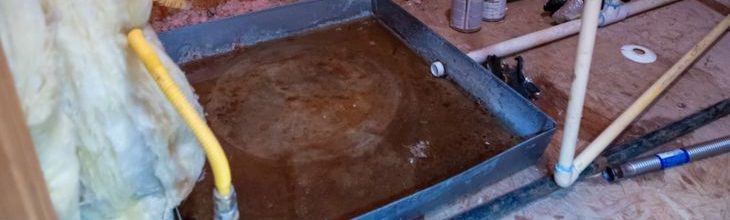
Somewhere in your house, there’s a small metal or plastic tray quietly catching water day after day, asking for nothing except to be left alone. That’s your condensate drain pan, the unsung hero of your air conditioning system, and also, if you ignore it long enough, the setup for a very soggy punchline. Let’s talk about how to find it, how to access it, and how to keep it from becoming the star of an unplanned “ceiling waterfall” show.
What is a Condensate Drain Pan?
When your AC cools the air in your home, it also pulls moisture out of it (that’s why summer indoors feels less like a swamp). All that extracted humidity has to go somewhere, and that somewhere is the condensate drain pan, sitting right underneath your indoor evaporator coil. From there, the water is supposed to flow neatly out through a drain line and leave your house. Most systems even have a backup, or “secondary,” pan just in case the primary one overflows, a little insurance policy against watching your ceiling develop a brand-new, un-asked-for water feature.
Step 1: How to Find Your Condensate Drain Pan
Before you can access your drain pan, you have to find it, and that depends on where your air handler (the indoor unit that houses the coil) calls home. In most houses, it’s hiding in one of these spots:
- Utility or air handler closet. Many homes tuck the air handler into a closet in a hallway, laundry room, or spare bedroom. Look for a tall, boxy unit with a door or removable panel on the front.
- Attic. If your air handler lives upstairs in the attic, the drain pan sits directly beneath it, usually with a secondary pan installed under that for backup.
- Garage. Some homes install the air handler in a garage closet or platform, which makes access a little easier since you’re not wrestling with attic insulation and questionable structural integrity.
- Basement mechanical room. Common in cooler climates, this is often the easiest spot to reach since there’s usually walking room all around the unit.
If you’re not sure which category your home falls into, follow the sound of the blower fan or check near your thermostat’s wiring path. The air handler and its drain pan are never far from where the ductwork starts.
Step 2: How to Access Condensate Drain Pan
Once you’ve located the general area, accessing the pan itself takes a few careful steps:
- Turn off the power. Flip the breaker for your air handler, or at least switch the thermostat to “off.” Working around water and electrical components at the same time is not the kind of multitasking anyone should attempt.
- Clear the path. Move storage bins, holiday decorations, or whatever else has migrated into that closet or attic corner. (We all know it’s more than you think.)
- Remove the access panel. Most air handlers have a front or side panel held on with a couple of screws or clips. Set the screws somewhere you won’t lose them, since under the couch cushions does not count as “somewhere safe.”
- Look, don’t touch (yet). Once the panel is off, you should see the coil sitting above the drain pan. Check the pan for standing water, rust, cracks, sludge, or a fine layer of what looks suspiciously like swamp muck.
- Check the drain line. Follow the PVC pipe running from the pan outside or to a floor drain. If it’s dripping somewhere it shouldn’t, or not dripping at all when the AC is running, that’s a clue something’s clogged.
Signs Something’s Wrong
A healthy drain pan is dry, or has a small amount of water quietly making its way toward the drain line. If yours looks more like a birdbath, or if you spot a pan full of standing water, that’s your cue to investigate before it turns into a bigger, wetter problem. Standing water is also prime real estate for mold, which the EPA notes thrives anywhere moisture sticks around, and that’s not exactly the roommate you signed up for.
Many systems also include a float switch that shuts the AC down automatically if the pan gets too full. If your system suddenly stopped cooling for no obvious reason, a tripped float switch is a prime suspect.
DIY vs. Pro: Who Should Handle the Job?
Before pulling out your tools, use this quick guide to determine whether your drain pan issue is a quick weekend fix or time to call in a specialist.
| Category | DIY-Friendly Tasks | Call a Professional |
|---|---|---|
| Inspection & Maintenance | • Inspecting the drain pan for rust or standing water
• Checking for visible debris |
• Investigating mold inside the air handler
• Evaluating pre-2010 R-22 systems for full replacement |
| Clogs & Leaks | • Flushing minor clogs with vinegar or warm water
• Vacuuming lines with a wet/dry vac |
• Clearing fully blocked or cracked drain lines
• Fixing recurring secondary pan overflows |
| Repairs & Installs | • Replacing standard air filters | • Working on hazardous/tight attic units
• Thawing or repairing frozen evaporator coils |
When to Call Your Local HVAC Company
We’re all for the DIY spirit, but there are times when calling in a professional is the smarter (and safer) play:
- Your system uses R-22 refrigerant and is over 15 years old. If your unit was installed before 2010, it likely runs on R-22—a refrigerant that has been fully phased out in the U.S. Heavy drain pan rust often points to coil leaks. Investing in major component repairs or custom retrofits on an obsolete R-22 system is usually throwing good money after bad; an HVAC tech can help you evaluate if a full system replacement makes more financial sense.
- You’re not sure which pan to buy. If your unit is older or the model number is impossible to find, guessing on size can lead to an expensive second trip to the hardware store. Our guide on replacing your AC drain pan can help you figure out what you’re working with.
- You find mold inside the air handler. Mold beyond the pan itself means you’ve got a larger indoor air quality issue that needs professional attention.
- The drain line is severely clogged or damaged. A minor clog is DIY-friendly. A fully blocked or cracked line that’s been leaking for a while is a different story.
- Your secondary pan is overflowing regularly. This is a sign of a systemic problem, not just a one-time fix.
- You’re not comfortable working in the attic. Between the heat, the tight space, and the live electrical components, attic air handlers are genuinely tricky. No shame in tapping out.
Regular AC maintenance goes a long way toward avoiding these headaches in the first place.
At Complete Air Mechanical, we handle drain pan replacements, condensate drain cleanings, and full system inspections, so you don’t have to go it alone. Whether it’s a quick fix or something bigger, we’ve got you covered (pan and all).
Call us today at 407-915-0144 or schedule an appointment online.